Matthew 7:21 is a deeply misunderstood teaching. It’s often understood either as a warning against “dead” works or flattened into a vague call to “just believe”. More often than not, it’s used to reinforce that faith is not about a life lived and condemns those seeking righteousness “through works”.
But none of those interpretations actually deal with what Yeshua is confronting. In actuality, those ideas directly contradict other verses in Scripture.
Not everyone saying to Me, “Lord, Lord!” will enter into the kingdom of the heavens, but the one doing the will of My Father who is in the heavens.
Many will say to Me in the day, “Lord, Lord, did we not prophesy in Your name, and in Your name cast out demons, and in Your name perform many miracles?”
And then I will declare to them “Never I knew you! Depart from Me those working Lawless.”
– Matthew 21-23
As we learned in the last post All those hearing and believing – Belief is not a matter of simple creed or verbal acknowledgement; it is a daily living faithfully following YHVH our God.
Calling Yeshua “Lord” is not a religious title; it is a declaration of mastery, submission and loyalty to our Sovereign King. And to say “Lord” while walking in lawlessness is not real faith- it’s contradiction.
The issue being discussed isn’t trying to “earn salvation“; it’s claiming allegiance without obedience.
“The will of My Father” is not just ‘agree’;
He has shown you, O man, what is good and what YHVH does require of you; but for to do justly, and to love mercy, and to walk humbly with your Elohim (God).”
– Micah 6:8
- Walk in Hebrew; halak– Obedience in action; covenant language inviting into the Ways of YHVH (Torah, His holy instructions)
- The Will of the Father is to walk in Righteousness “You shall be holy, for I YHVH your Elohim, AM holy.”- Leviticus 19:2
- This is repeated throughout Scripture: Deuteronomy 5:33, 10:12-13, Psalm 119:1-2, Proverbs 2:20, Isaiah 2:3, 11:9
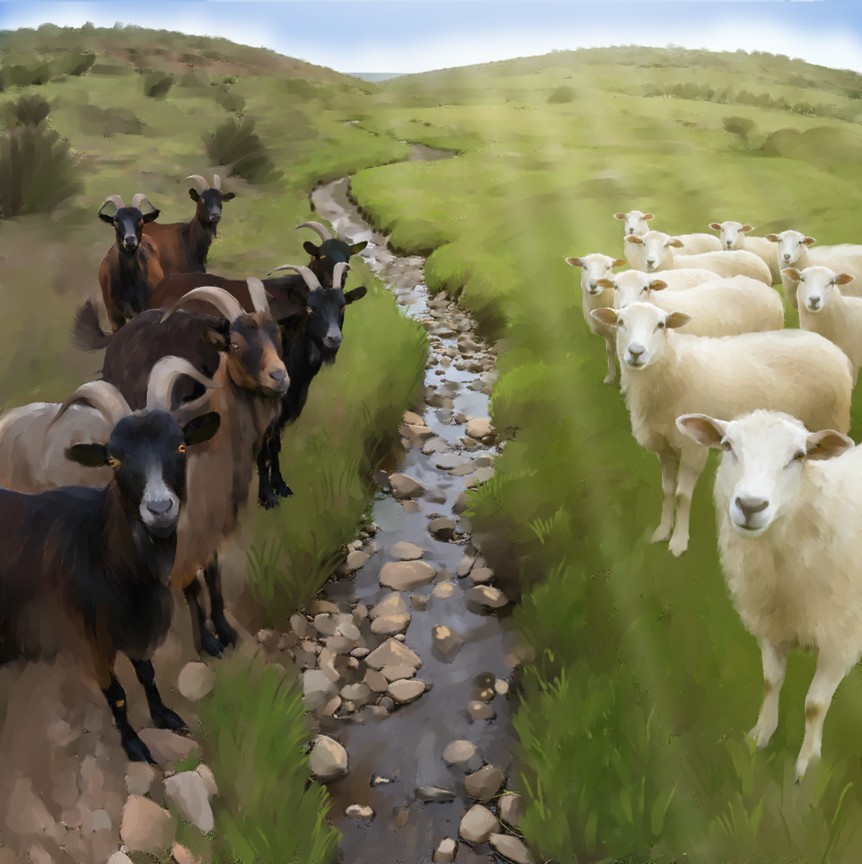
This is why Yeshua’s words in Matthew 7:21-23 closely echo His parable of the sheep and the goats
The Sheep and the Goats
And will be gathered before Him all the nations. And He will separate them from one another as the shepherd separates the sheep from the goats. And He will set the sheep on His right and the goats on the left. Then will say the King to those on His right, “Come those being blessed of My Father, inherit the kingdom having been prepared for you from the foundation of the world.
I hungered indeed and you gave Me to eat; I thirsted and you gave Me drink; I was a stranger and you took Me in. Naked and you clothed Me; sick and you visited me; in prison I was and you came to Me.”
Then will answer Him the righteous, saying, “Lord- when did we see You hungering and fed you? Or thirsting and gave You drink? When now were You a stranger and we took You in? Or naked and clothed You? When now did we see You ailing and or in prison and came to You?
And the King will answer, saying to them, “Truely I say to you to the extent as much you did to one of My brothers, the least you did to Me.”
Then He will say to those on the left, “Depart from Me those being cursed to the fire eternal, having been prepared for the devil and his angels. I hungered and nothing you gave Me, and I thirsted and nothing you gave Me to drink. A stranger I was and not you took Me in. Naked and not did you clothe Me, sick and in prison and not did you visit Me.”
Then will answer them also saying. “Lord, when did we see You hungering or thirsting, or a stranger, or naked or sick, or in prison not did serve You?”
Then He will answer them saying, “Truly I say to you, not you did to one of these the least, the least neither to Me did you do.”
And will go away these into punishment eternal, but the righteous into life eternal.
– Matthew 25: 32-46
In this judgment- day scene, both groups address Him as “Lord”, so both assume they belong to Him. Yet only one group is recognized as His own. The distinction is not profession but fruit; not perfection, but heart posture revealed through lived obedience. The separation is not based on what they claimed, but on what their lives revealed.
The sheep do not earn their place by good deeds; their actions simply expose who they are and who they belong to.
The goats, though confident in their standing, “when did we not?” reveal by their lack of faithfulness, mercy and submission that they were never truly aligned with the Shepherd.
In the same way, when Yeshua says, “I never knew you,” He isn’t describing believers who failed to “believe hard enough”. He’s describing people who claimed Him but were never truly in Him- never walking in the righteousness that comes from surrendering your life to the will of the Father.
As Paul later writes in Romans 6 we are slaves- either to sin or to righteousness- and there is no neutral ground.
Lawlessness (anomia) is not a metaphor for human weakness- it is literal disobedience, a rejection of the Father’s instructions while still invoking the Son’s name. This is the same accusation the prophets thundered for centuries:
This people draws near with their mouth and honors Me with their lips, but their heart is far from Me.
– Isaiah 29:13
Yeshua isn’t introducing a new standard built on profession- He is restating the ancient covenant truth: allegiance without obedience is not faith at all.
Judged by Works
Throughout Scripture, judgment is consistently described as being according to deeds, and not ever by verbal acknowledgment. That is because anyone can say anything- words may declare belief, but deeds reveal allegiance. Yeshua never says, “You will know them by what they confess,”
He says, “You will know them by their fruit.”
And the children of her I will kill with death, and will know all the congregations that I AM the One searching the affections and the hearts, and I will give of you each according to your works.
– The Revelation 2:23
And I saw the dead, small and great, standing before God, and books were opened. And another book was opened, which is the Book of Life. And the dead were judged according to their works, by the things which were written in the books.
– The Revelation 20:12
That’s pretty clear language- and it’s one of the main reasons that the modern church tends to stay out of The book of Revelation. It’s a confusing message when you’ve been told “Salvation come from Grace, not works” and “The Law is dead”.
We’re not disputing that salvation is not earned; it is a gift of a merciful and loving God.
But when we step out of the framework of the modern church, we see that grace is not merely a covering of endless forgiveness in the presence of disobedience. Works do not earn righteousness- they expose it. They reveal whether a person was walking as a slave to righteousness or remaining in lawlessness while still claiming to profess Him.
This is why faith without works is dead.
Thus also faith by itself, if it does not have works, is dead.
James 2:17
Not because works are the cause of being saved, but because faith truly alive in Messiah acts.
Works are not the root of salvation; they are the evidence of life.
The Spirit Cannot be at Peace in Sinful Living
A faith that produces no obedience, no fruit and no submission is not immature faith- it is lifeless faith. What does not move the will has never transformed the heart.
Someone who is truly guided by the Spirit cannot live at peace with sin. The Spirit sets the heart against lawlessness; a life surrendered to Yeshua is at war with anything that dishonors God. What He calls abomination cannot be comfortably embraced, because the Spirit produces conviction, resistance and a longing for obedience from a heart of love and serving.
Yet this is a message few in the church are willing to preach- or even hear. It is easier to focus on ritual, comfort, or appearances than to confront the reality that deliberate sin is incompatible with true communion with God.
Those who claim Him as “Lord,” Master, Sovereign King- yet persist in deliberate sin- reveal that they were never truly transformed. Their hearts are not aligned with His will and the Spirit does not dwell in peace within a life that refuses to submit.
Leave a Reply